Where does the “smell” of a memory foam pillow come from? How can I quickly remove the odor from a new pillow?

Have you ever experienced this? You joyfully unwrap your new memory foam pillow, anticipating a good night’s sleep, only to be startled by the overwhelming smell. It’s not overpowering, but it evokes a new car, paint, or even a hint of chemical. This leads many to wonder: Where does this smell come from? Is it safe? And how can it be quickly removed?
Don’t be impatient; let’s talk about this seemingly embarrassing issue first.
Why do new pillows have a smell?
The smell of a memory foam pillow isn’t a sign it’s “bad” or “toxic,” but rather a natural consequence of the manufacturing process. Remember, its core material is polyurethane foam, which produces substances called volatile organic compounds (VOCs) during the foaming and setting process.
Sources of VOCs: foaming agents, adhesives, additives, etc. used during manufacturing.
Odor characteristics: Somewhat similar to the smell of new shoes or new furniture.
Dangerousness: Most reputable brands have been tested, and the amount of VOCs released is within a safe range. However, people who are sensitive to odors may feel dizzy or uncomfortable.
One user shared on a forum that when she first opened a 60D memory foam pillow, the smell reminded her of a new car. She was initially concerned, but after two days of airing it out, the odor had largely dissipated. “I realized it’s just like buying a new pair of sneakers—it takes a while for the odor to ‘break out,'” she said.
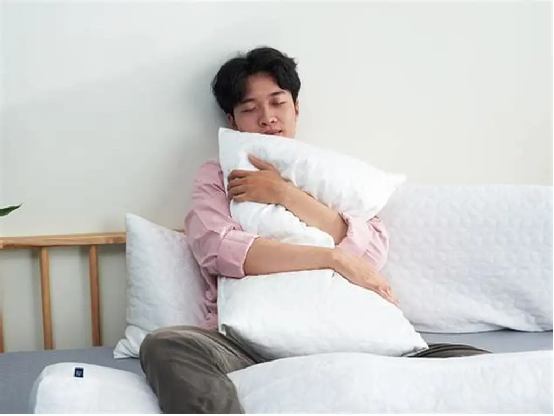
Why do some people think the smell is strong while others don’t?
This is an interesting phenomenon. There are actually many factors that influence it:
Personal olfactory sensitivity:
Some people are particularly sensitive to smells, and even the slightest smell will be magnified.
If you unpack the package in a small bedroom, the smell will accumulate more easily. On the contrary, if you unpack it in the living room or balcony, the smell will dissipate faster.
Density and packaging:
High-density pillows typically contain more foaming agent and may have a stronger initial odor. Furthermore, vacuum-compressed packaging “seals” odors during transportation, releasing them once opened.
So, for the same memory foam pillow, you may find it “a bit choking,” while others may find it “acceptable.”
How to quickly remove the odor of a new pillow?
If you have just bought it and can’t wait to use it but are worried that the smell will affect your sleep, you can try the following methods.
1. Ventilate and dry
The simplest and most effective method is to place your new pillow in a well-ventilated area away from direct sunlight. The odor should generally be significantly reduced within 1–3 days.
2. Use a pillowcase or breathable cover
Covering your pillow with a 100% cotton or bamboo fiber pillowcase can not only reduce the direct smell but also help absorb some residual odor.
3. Uses of Baking Soda
Sprinkle a light layer of baking soda on the pillow surface, let it sit for a few hours, then tap it off to neutralize some of the odor. This is a common “odor removal tool” in many households.
4. Use an air purifier
If you’re in a small room, running an air purifier (especially one with an activated carbon filter) will help break down and dissipate the odor faster.
5. Be patient
In fact, most users experience that the odor is significantly reduced, typically within a week, and is barely noticeable anymore.
Odor and Health: Is There Any Worry?
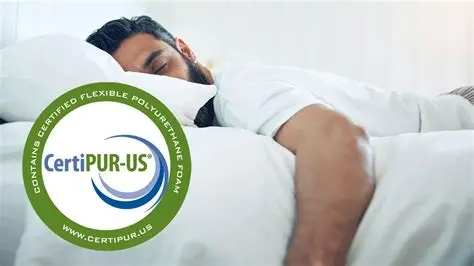
It’s important to clarify that odor doesn’t necessarily mean harmful. Memory foam pillows have strict international safety standards, such as the CertiPUR-US certification, which clearly stipulates upper limits for VOC emissions. If you purchase a reputable brand or a certified product, you can use it with complete confidence.
However, here are a few tips:
If you are pregnant, breastfeeding, or have a baby at home, it is best to let the pillow fully air out before using it.
People who are sensitive to odors or have respiratory diseases can give priority to styles with low VOCs certification.
Avoid keeping your new pillow in a sealed room for long periods of time, as this will cause the odor to accumulate longer.
Industry Trend: Are “Odorless” Pillows the Future?
As consumers pay more and more attention to health and environmental protection, memory foam pillow manufacturers are also constantly improving. For example:
Plant-based foaming: Some brands use soybean or castor oil to replace some petrochemical raw materials.
Low VOCs technology: More and more products meet or exceed CertiPUR-US standards.
Ventilation hole design: not only improves heat dissipation but also accelerates odor release.
In the European and American markets, “green foam” is becoming a trend. Perhaps new pillows of the future won’t have that familiar “new car smell” when you unpack them.
Don’t be scared by the smell; it’s just a temporary visitor
after buying a new memory foam pillow. This smell is primarily caused by residual VOCs from the manufacturing process and typically dissipates within a few days to a week. You can speed up the odor removal process by using ventilation, baking soda, or an air purifier.
What is really worth paying attention to is choosing a brand with safety certification and using it reasonably according to your own situation.
So, the next time you encounter that “new pillow smell,” don’t panic. It’s more like a reminder that your sleep gear just got a makeover.
Finally, here’s a question: Can you tolerate the temporary odor of a new pillow, or do you have to wait for it to completely dissipate before using it? Leave a comment and let us know—you might find someone else’s “odor-removal trick” that’s just what you need.