What do OEKO-TEX® and CertiPUR-US® environmental certifications for memory foam pillows mean?

Have you ever slumped down with your newly bought memory foam pillow, only to have a question pop up in your mind: “Is this pillow safe for me? Has it passed any certification?” Sleep is an intimate matter. After all, your face is in direct contact with the pillow for seven or eight hours a day. If the pillow’s materials or chemical composition aren’t up to standard, it’s not just a comfort issue; it could also raise health and environmental concerns. Therefore, OEKO-TEX® and CertiPUR-US® certifications are crucial.
Why does the memory foam pillow need certification?
Many people are impressed by the slow rebound feel of memory foam products when they first come into contact with them. But remember, foam is essentially made of chemical materials. During the manufacturing process, blowing agents, flame retardants, and even adhesives may be used. If these ingredients are not strictly controlled, they may release harmful substances.
Some users have even shared that they’re experiencing a pungent “new pillow smell” upon unpacking their pillow. This odor actually comes from VOCs (volatile organic compounds). While the odor usually dissipates after a few days of ventilation, without a certified pillow, it’s difficult to confirm whether it contains excessive levels of substances. In other words, certification isn’t just a label; it acts as a safety filter.
OEKO-TEX®: A safe guarantee for intimate products
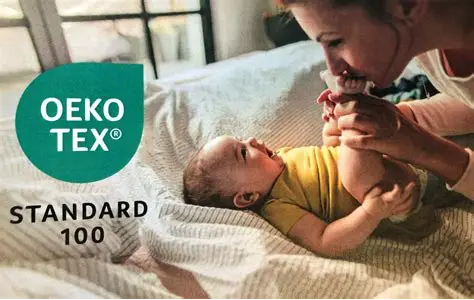
You may have seen the name OEKO-TEX® on clothing labels. It’s a globally recognized textile safety certification system, one of its core standards being STANDARD 100. For memory foam pillows, the OEKO-TEX® logo means:
The pillowcase fabric has been tested and does not contain heavy metals, allergenic dyes, or pesticide residues that are harmful to the human body.
The parts that come into direct contact with the skin have passed rigorous testing, so babies and sensitive people can use it with confidence.
The testing scope is not limited to finished products; even threads and zippers used in the production process may be included in the testing.
Simply put, OEKO-TEX® focuses on “skin-friendly safety.” If you’re buying a pillow for its skin-friendliness and hypoallergenic properties, this certification can be a reassurance.
CertiPUR-US®: A healthy commitment specifically for foam
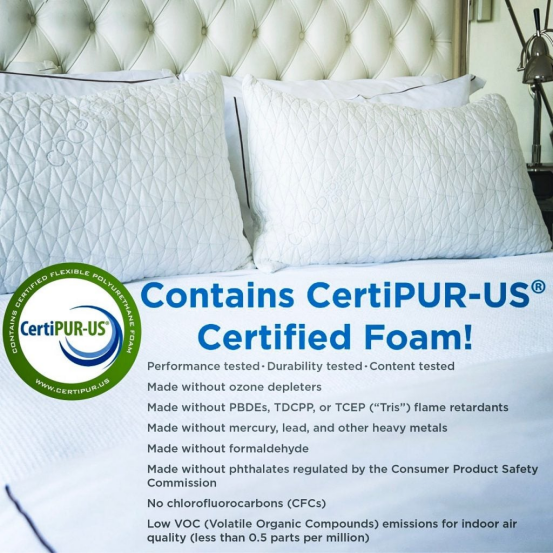
While OEKO-TEX® focuses on fabrics, CertiPUR-US® is a certification specifically designed for foam. Launched by a US non-profit organization, it primarily tests the core components of memory foam. A pillow that receives this certification means:
Does not contain harmful flame retardants such as PBDE, TDCPP, or TCEP.
Contains no mercury, lead, heavy metals, or phthalates, which may pose a health risk.
Pass a low VOC emission test to ensure indoor air quality is not affected.
Some consumers have shared that after purchasing a CertiPUR-US® certified pillow, they noticed a noticeably lighter odor, and even after prolonged use, they no longer had that strange “aging” smell. This is a direct reflection of the certification’s practical experience.
How to choose between the two certifications?
Some people may ask, “Which certification should I look at? OEKO-TEX® or CertiPUR-US®?” The answer is actually: it is best to look at both.
If you care more about next-to-skin comfort and fabric health, then OEKO-TEX® is the key.
If you are concerned about the safety of the foam material itself, then CertiPUR-US® is essential.
If a pillow has both certifications, it can basically be said to be “double insurance.”
In the US market, many brands that prioritize environmental friendliness and premium sleep experience ensure their products pass both certifications. This is not only a guarantee for users but also a competitive advantage for the brand. After all, who doesn’t want to sleep peacefully?
User Experience: The Real Feeling Behind Certification
Let’s talk about something more practical. My friend Anna recently moved and got a brand new set of bedding, including a memory foam pillow. She specifically chose a model that was both CertiPUR-US® and OEKO-TEX® certified. Her experience: the odor was almost negligible the first day she unpacked it and completely gone the next day. Her previous, uncertified pillow still had an odor even after a week of airing. She quipped, “Certification not only adds value to the product but also saves me from worry.”
This also illustrates a reality: certification is not just something on paper; it will directly affect the user experience and even determine whether you can sleep peacefully.
Environmental certification and sustainable consumption
From a broader perspective, OEKO-TEX® and CertiPUR-US® are not just about personal health; they are also closely linked to environmental protection and sustainable development. For example, CertiPUR-US® requires factories to reduce harmful emissions during the production process, while OEKO-TEX® encourages the textile industry to reduce the use of toxic dyes and chemical auxiliaries.
As more and more consumers consider certification when purchasing memory foam pillows, this is actually pushing the entire industry towards a greener and more transparent future.
Summarize
A good memory foam pillow should not only offer excellent rebound and support but also provide peace of mind regarding safety and environmental protection. OEKO-TEX® focuses on the fabric’s next-to-skin safety, while CertiPUR-US® ensures the health of the foam core. If you’re choosing a pillow, seeing these two certifications is a sure sign of reliability.
Next time you’re hesitant on an e-commerce platform, take a look at the labels first. After all, good sleep shouldn’t come with hidden worries.
Sleep is the simplest yet most luxurious happiness. Will this certification change your purchasing habits? Share your thoughts in the comments.