The “sound wave absorption” ability of memory foam pillows: a boon for those sensitive to noise?

A Night Out for Noise Sensitives: Can Pillows Really Be “Silent”?
It’s late at night. Car lights outside the window, footsteps upstairs, the low hum of the TV next door… Do you toss and turn in bed, disturbed by all sorts of noise? I am one of them. One night, I pressed my ear to the headboard, trying to detect which beam was making the “clacking” sound. I wondered: Is there a pillow that not only comfortably supports my head and neck, but also absorbs some sound, helping me block out the nighttime noise?
You may have heard of acoustic foam used to reduce noise on recording studio and theater walls. While not specifically an acoustic material, a memory foam pillow , due to its foam structure, does have a certain sound-absorbing capability. So, in practice, does it reduce sonic interference? Or is it just an “imaginary silent pillow”? This article explores four aspects: acoustic principles, material structure, real-world examples, and practical recommendations.
How does foam absorb sound: starting from the principle
Sound absorption vs. sound insulation: the essential difference must be understood first
To understand whether a memory foam pillow can “reduce noise”, we must first distinguish two concepts:
- Soundproofing (or sound blocking) is the process of preventing sound from passing through walls or structures, thereby reducing the ingress of external sound. This is often achieved through the use of high-density, heavy-weight materials.
- Sound absorption : Reduces reflection, reverberation, and echo within a space, allowing sound waves to be dissipated internally (e.g., converted into heat). This is often achieved through porous, open-cell, or mesh materials. (See Acoustical Surfaces for an analysis of sound absorption vs. sound insulation.)
If a memory foam pillow is to work in a “nighttime environment”, it can be considered more of a slight “sound absorbing/acoustic buffering” material rather than a strict soundproofing device.
The open pore structure of foam determines that it has certain sound absorption potential
Acoustic foams used for acoustic purposes are usually open-cell foams with a large number of interconnected pores, which are used to capture sound waves and allow air vibrations to scatter along the internal structure, causing friction and dissipation as heat energy.
Most memory foams have a certain density and porosity in their structure, which means they theoretically have some sound absorption capacity. For example, when sound waves penetrate the pillow’s surface, some of the energy is dissipated by friction within the foam fibers. However, because memory foam is primarily designed to dampen body pressure and support the body, rather than absorb sound waves, its acoustic performance is generally inferior to that of professional sound-absorbing materials.
Some reviewers have pointed out that compared to foam specifically designed for sound absorption, memory foam, while “effective,” is often not extremely effective. As someone commented on the GearSpace forum:
“Acoustic foam is engineered … memory foam is made to contour to the body … you’ll get something out of memory foam … but it isn’t going to offer something other types don’t.”
There are also discussions in the sound engineering community that mattresses/foam can reduce reflections (alleviate reverberation) within a space, but are less helpful for sound propagation through walls/structures.
In a discussion thread on AudioScience Review, it was also mentioned that when the density of memory foam is high, the pores become smaller, which will weaken its sound penetration and absorption capabilities.
Therefore, theoretically, the memory foam pillow has a certain effect on indoor sound reflection and sound wave perturbations near the head, but we cannot expect it to “block noise” like a soundproof wall.
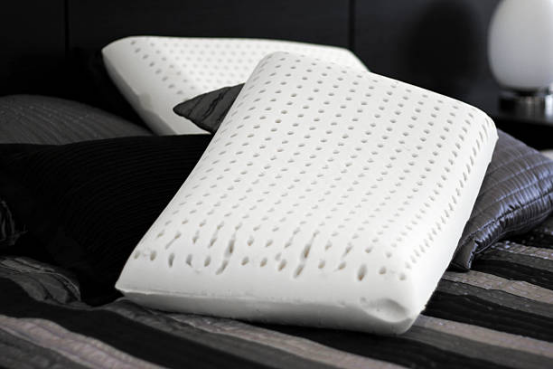
Actual Experience and Case Study: Acoustic Performance of Memory Foam Pillow in Sleep Environment
While theory is important, it’s the actual experience that truly determines whether you “feel the silence.” Here are my observations and those of some users:
My experience: Comparing pillows for midnight listening
I conducted a comparison test using different pillow types over two nights:
- Pillow A : Traditional memory foam pillow, standard density, no special acoustic treatment.
- Pillow B : slightly thicker, slightly higher density, with a certain amount of pore design (the manufacturer’s mark is “vibration cushioning/noise relief”).
In the same room, under the same circumstances, I felt the sound of a car near the window was slightly softer and less piercing when using Pillow B that night. However, the difference wasn’t dramatic when I opened the window or heard footsteps in the hallway. The next night, I switched back to Pillow A, and the echo was slightly stronger, especially when there was noise near my ear.
This subjective experience shows that the memory foam pillow has a certain alleviating effect on “near-head vibration/quiet sound reflection”, but the isolation of overall ambient noise is not obvious.
Industry/user feedback observation
- Some brands are offering pillows with “noise-reducing/noise-blocking” features (e.g., embedded headphones, noise-reducing materials, etc.) to compensate for the limitations of foam itself. For example, the Soli Pillow’s official website advertises its pillow as “near soundproof/blocking unwanted sounds.”
- In the acoustics/audio forum, some people tried to use mattresses/foam as room sound-absorbing materials, but concluded that these materials can reduce reverberation and control high-frequency reflections, but have limited improvement on low-frequency and external sound transmission.
- Blogs/materials in the foam manufacturing industry also emphasize that the foam used for acoustic applications is different from the ordinary furniture/bedding foam formula, and the pore structure, thickness, hardness and fire protection standards are specially optimized.
In summary, the memory foam pillow’s sound absorption is more of a bonus than a key selling point. It might be a minor benefit for those sensitive to noise, but if the ambient noise level is high, the pillow itself isn’t enough to address the core issue.
To make the memory pillow a “quiet weapon”, feasible design/strategy directions
Since memory foam pillows aren’t naturally the best sound-absorbing material, is it possible to improve their performance in a sleeping environment through design and coordination? The answer is yes, and here are a few possible approaches.
1. Increase the thickness of the pillow / multi-layer structure + sound-absorbing layer fusion
By adding a thin layer of sound-absorbing material (such as microporous foam, a fiber-absorbing layer, or a damping layer) to the inside or back of a pillow, you can create a localized acoustic cushion at the back of the head. This is similar to placing a light “acoustic pad” behind the ear.
This hybrid structure is already found in some high-end products (brands may refer to it as a “noise-reducing/hybrid shock-absorbing layer”).
2. Optimize foam pores/open cell structure
During the manufacturing process of memory foam, adjustments are made to pore size, connectivity, and membrane structure (such as the semi-permeable membrane wall) to optimize the foam’s damping and dissipation of sound at different frequencies. Academic research indicates that controlling the foam’s membrane level—that is, the pore window/membrane structure—can significantly influence its acoustic properties.
In other words, even memory foam used for human body support can be acoustically optimized in pore design to provide both comfortable support and better sound absorption performance.
3. Pillow geometry/contour design + minimized contact surface
Sound propagation is often related to contact surfaces and refraction paths. A pillow with a slightly wavy, curved, or folded surface can reduce planar reflections. Alternatively, using a slightly sound-insulating or shock-absorbing fabric on the pillowcase can reduce direct sound transmission to the head.
Furthermore, the fit of the pillow to the headboard or wall can also affect reflections. Maintaining a certain gap between the pillow back and the wall can prevent resonant reflection paths.
4. Cooperate with the overall room noise reduction/sound absorption strategy
Pillows can only provide partial relief. For overall quietness, it is recommended to use room-level sound absorption/soundproofing measures:
- Sound-absorbing materials (sound-absorbing panels, fabrics, thick curtains) can be added to the walls/ceilings/floors.
- Use heavy curtains, sealed window slits, and soundproofing strips under doors
- Carpets, soft fabric furniture, etc. also help absorb sound
- Auxiliary noise masking such as white noise/ambient sound machine/sound barrier device
Under this combination strategy, the “sound wave cushioning + close-range sound absorption” function of the memory pillow can be better amplified.
Tips for Noise Sensitive People/Pillow Buyers
Here are some practical tips to help you maximize your memory foam pillow’s potential in terms of quietness when purchasing and using it.
- Check the product description to see if it mentions “acoustics/noise mitigation/sound absorption layer/hybrid structure” ; this type of design may have a slight advantage.
- Prefer thicker/multi-layered/highly porous pillow styles , which are more conducive to the entry and absorption of sound waves
- Choose pillowcases made of slightly sound-absorbing/damping fabrics, such as terry or linen blends.
- Keep pillows a little distance from the wall/headboard to avoid resonant paths for reflected sound
- Combined with the room’s sound absorption/sound insulation measures , the pillow is only a partial barrier and cannot be relied upon in isolation.
- Comparison of actual test environments : Change pillows in a quiet environment and in an environment with background noise to see if any sharp sounds are softened by listening to the background sounds of fans and air conditioners.
Memory foam pillow is a “mute device” rather than a “soundproof wall”
Expecting a memory foam pillow to completely reduce noise is unrealistic. It’s not a soundproof wall, nor can it block out the sounds of street sirens or floors above. However, for many people, the slight sound absorption and cushioning effect of the foam is enough to soften minor reflections and ear noises at night, and it may even be a sleep benefit for those with noise sensitivity.
If you’re planning on changing your pillow , here are some popular memory foam pillows .