The History and Implications of Sleep: From Ancient Times to the Memory Foam Pillow

Close your eyes, and your body quietly recharges its energy. Sleep, seemingly ordinary, actually hides thousands of years of human reflection and exploration. From ancient mythology and philosophy to modern scientific experiments and even the pillow at our bedside, the story of sleep is far more fascinating than you might imagine.

Views on sleep in ancient and civilized societies
The earliest signs of “sleep” can be traced back to the simplest life forms on Earth. Even microorganisms enter a rhythmic state similar to dormancy – this may be necessary for energy conservation and survival.
In the early days of humans, sleeping patterns were much more flexible, often multi-segmented and adjusted according to environmental and safety conditions.
Different civilizations have also given special meaning to sleep:
Egyptians believed that dreams were a channel to the gods and even built “dream temples”.
Mesopotamians : Dreams were seen as omens, and sleep and death were often placed side by side in literature.
Greece and Rome : Philosopher Aristotle and physician Hippocrates emphasized the importance of sleep for health. The Romans also considered sleep a gift from the gods.
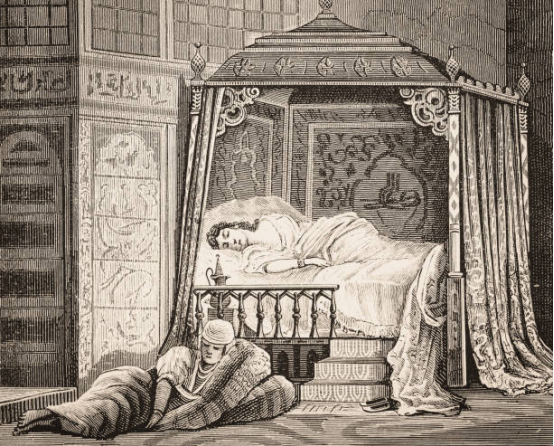
Reflections on Sleep in Religion and Philosophy
Religions often imbue sleep with symbolic meaning. In the Bible, Jacob’s dream brought enlightenment; while Hinduism and Buddhism emphasize the relationship between sleep and spiritual practice, the former focusing on restoration and awakening, and the latter emphasizing “mindful rest.”
Philosophers were equally eager to explore the concept. Aristotle believed that sleep helped the brain regulate body temperature, while Descartes described dreams as the soul’s “nighttime work.” While these ideas may not be entirely accurate, they nonetheless paved the way for subsequent scientific research.

Scientific breakthroughs and modern research
After the Renaissance, scholars began to systematically study the connection between sleep and the brain. In the 18th century, people discovered circadian rhythms through observation of plants; this became the key to understanding the “inner clock” of organisms.
In the 19th century, research gradually delved into the physiological aspects of sleep, with scientists discovering that sleep is divided into multiple stages and could be tracked through brain waves. The real breakthrough came in the 1950s with the discovery of rapid eye movement (REM) sleep, which for the first time allowed people to understand the close connection between dreams and brain recovery.
These discoveries have advanced sleep medicine. For example, polysomnography can help doctors diagnose insomnia and sleep apnea. As research deepens, people are increasingly aware of the importance of the sleeping environment, with proper neck support becoming a key factor influencing sleep quality. It’s against this backdrop that products like the Memory Foam Pillow are gaining increasing attention and adoption.
Technological development and modern challenges
In the past, humans’ daily routines were largely dictated by sunrise and sunset. After Edison invented the electric light, nights became infinitely longer, and sleep duration began to decrease. In the digital age, blue light from screens makes falling asleep even more difficult, almost a form of reverse evolution.
Scientists therefore emphasize that maintaining high-quality sleep requires not only a regular schedule and a quiet environment, but also the right sleeping tools. Many people have shared their experiences: after switching to a memory foam pillow, they experienced less pressure on their cervical spine, less tossing and turning at night, and a noticeable improvement in their mental state the next day.
Inspiration from history to the present
From ancient mythology to modern laboratories, humans have always asked the same question: How can we truly sleep well?
History shows us that humans have constantly adapted their methods to pursue higher-quality rest. Today, scientific findings have long been integrated into daily life. A Memory Foam Pillow, designed to conform to the curve of the neck, may be the practical culmination of this long quest—it carries not only comfort but also the wisdom and experience of humanity’s ongoing pursuit of good sleep.