Can a memory foam pillow and the right scent really change your sleep?

Some nights, you might have tried everything—scrolling through your phone until you’re sleepy, drinking warm milk, even counting sheep—but still tossing and turning. That’s when I finally realized that sleep isn’t just about lying down; it’s about creating an atmosphere. Smell, touch, even the support of your pillow can make or break a restful night. So I started experimenting with aromatherapy combined with my Memory Foam Pillow , and it was surprisingly effective.
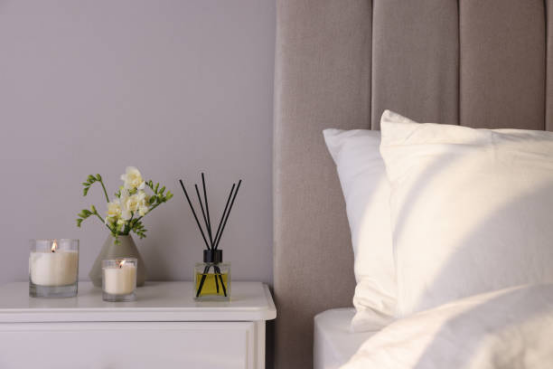
Why can smells “hack” your brain?
Is there a scent that instantly transports you to a memory? Freshly cut grass, for example, reminds me of summer afternoons. The connection between smell, memory, and emotion is innate, which is why a touch of lavender essential oil in a quiet bedroom can soothe and soothe. That soothing feeling, combined with the firm support of a Foam Pillow , creates a truly secure feeling.
Scientific research supports this. According to a study published in the Journal of Alternative and Complementary Medicine, the scent of lavender and chamomile can actually help reduce anxiety and promote deep sleep. In other words, this isn’t just a psychological suggestion, but a real chemical reaction in the body. When this reaction is combined with a comfortable posture—for example, when the head and neck are supported by Memory fabric—sleep quality is significantly improved.
Several common sleep-inducing aromas
Lavender : Considered the “gentle queen” of sleep, this subtle floral scent wafts by your pillow. Paired with a memory foam pillow that conforms to the curves of your head and neck, it will gradually loosen tension in your body.
Chamomile : When I feel restless during the day, I love to drink a cup of chamomile tea. At night, I’ll let my diffuser quietly work by my bed, gently filling the air with a hint of herbal sweetness. Paired with the soft Pillow , it feels like it’s telling me, “Okay, today’s over.”
Valerian : The scent is slightly stronger, but when diffused in the bedroom, it is like a soft lullaby. Together with the supportive feeling of Foam , it reminds the brain that it is time to rest.
Sandalwood : A woody scent that is steady and grounding. Perfect for those nights when your mind races and you feel overwhelmed.
Smell isn’t a panacea, but it can help you activate your body’s “relaxation button.” Adding tactile support, like the Pillow under your head that doesn’t move around or collapse, can complete the sense of security.

How can we incorporate these scents into our daily lives?
Many people think that it takes a lot of effort, but it’s not. A few small actions before bed are enough to transform your bedroom from an “ordinary room” to a “sleep haven.”
Add two drops of essential oil to your pillowcase so the aroma is inhaled as you bury your face in the Memory Foam Pillow .
Place the diffuser by your bed so the scent flows gently without being overly stimulating.
If you are not used to oils, making a cup of chamomile tea and holding the warmth in your hands can also be relaxing.
A friend of mine even dips a small cloth in sandalwood essential oil and gently places it next to Pillow . She says it’s like turning on a “switch” for the night; once she smells the scent, her body automatically switches to sleep mode.
Tips
Don’t overdo it, especially in a confined bedroom. It should be the background, not the star. The stars are always you and your resting environment. A suitable Memory Foam Pillow , combined with a subtle aroma, acts as a double insurance policy, encouraging your brain to drift off to sleep.
Common misunderstanding: The stronger the fragrance, the better
Many people who try aromatherapy for the first time assume that the scent must be strong to be effective. This is actually quite the opposite. Overly strong scents can stimulate the nerves and increase mental alertness, which can be counterproductive. The correct approach is to keep the scent subtle, like background music, so it doesn’t steal your attention.
A little knowledge about materials
Essential oils are mostly natural, but synthetic versions are also available. When choosing, try to opt for pure essential oils to avoid those with additives. The material of your pillow is also crucial. Slow-rebound materials like Memory Foam fine-tune their support points based on body temperature, eliminating the messy feel of cotton pillows. A good scent combined with the right feel is the key to a solid foundation.
In fact, for many people who suffer from chronic insomnia, the problem isn’t that they can’t smell aroma, but that their bodies have never been comforted. The combination of aromatherapy and the Memory Foam Pillow is like comforting both the mind and body simultaneously.
Let the night become a gentle invitation
Ultimately, sleep isn’t a battle, it’s a natural progression. As lavender, chamomile, or sandalwood gently diffuses in the air and your Memory Foam Pillow securely supports you, you’ll find that sleepiness isn’t forced, but invited.
If you’re also looking for a more natural way to sleep, start tonight by adding a touch of gentle scent to your bedroom and try a Pillow that supports your head and neck . Sleep can actually be simple.