Sleep optimization for Parkinson’s patients: How a memory foam pillow reduces tremor disturbances

In an era when insomnia has become a modern epidemic, nights for Parkinson’s patients feel more like a battle—a constant tug-of-war with muscle stiffness, involuntary tremors, and fragmented sleep. Medical research shows that over 70% of Parkinson’s patients experience sleep disturbances, stemming not only from the disease itself but also from the body’s inability to find a stable position at night. Against this backdrop, a memory foam pillow with a scientific structure and flexible support becomes more than just a pillow; it acts as a therapeutic “sleep aid.”
When sleep becomes a “battleground”: Parkinson’s disease’s real nighttime challenges
Parkinson’s patients often experience a more erratic state of mind at night than during the day. Muscle stiffness makes it difficult for them to turn over, while subtle tremors can disrupt newly established sleep rhythms. Nursing homes have documented this scenario: patients, barely entering a light sleep phase, are jolted back into consciousness by involuntary muscle contractions, leaving them exhausted but unable to relax.
This is known as “sleep fragmentation.” Over time, it not only hinders deep brain repair but also further impairs daytime motor coordination and cognitive abilities. Choosing the right sleep support system is crucial.
A memory foam pillow lies in its thermal response. When the head and neck come into contact with the pillow, the foam gradually softens in response to body temperature, forming a contoured, supportive shape. This means that regardless of the user’s slightest tremor or muscle tension, the pillow maintains stable support and pressure distribution, preventing “bounce” with even the slightest movement, thereby reducing vibration transmission.
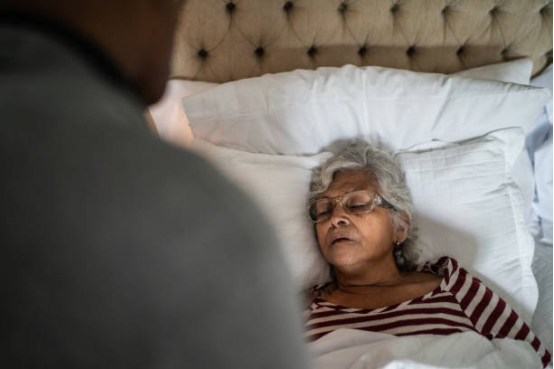
Science Backs It Up: Why Memory Foam Stabilizes Tremors
On the surface, Parkinson’s tremors may seem unrelated to pillows, but from a physical perspective, the relationship between the two is extremely subtle. Traditional down or polyester pillows quickly rebound when subjected to force. This “rebound shock” amplifies the tremor’s feedback, making it more difficult for patients to remain still. However, the viscoelastic structure of memory foam absorbs vibration energy, forming a “buffer barrier” that gradually absorbs and dampens the tremor.
A 2023 study by the University of Nottingham in the UK found that Parkinson’s disease patients who used high-density memory foam pillows experienced an average 22% reduction in spontaneous tossing and turning during the night and an approximately 15% improvement in sleep continuity. This suggests that flexible support is not synonymous with “softness” but rather a strategic form of stability.
Furthermore, modern Parkinson’s sleep comfort research emphasizes that cervical spine and head stability have a reverse regulatory effect on muscle signals. Specifically, when the neck is properly supported, the nervous system is more likely to “receive relaxation signals” and reduce excessive tension reflexes. In other words, a perfectly positioned foam pillow may be the key trigger that tricks the body into believing it’s safe.
Design Ideas: How to customize a memory foam pillow for special sleeping needs
For Parkinson’s patients, pillows aren’t just about height and firmness; they’re also about posture management and nighttime safety. Some orthopedic memory foam pillows on the market are designed specifically to reduce muscle pressure. Their core benefits are:
1. The slow-release structure
and partitioned support can disperse the pressure on the neck and head and avoid secondary stiffness caused by long-term fixed posture.
2. Temperature-sensitive regulation
High-end memory foam pillows contain a breathable microporous system that can maintain a constant pillow surface temperature through air flow, avoiding overheating and increased muscle tension.
3. Stable Base:
Some nursing institutions recommend using pillows with a slightly non-slip base to prevent patients from unconsciously moving during the night and causing the pillow to shift. This seemingly minor detail can effectively reduce the risk of nighttime accidents.
Some innovative brands are experimenting with incorporating “pressure mapping” technology into pillows, adjusting the density of the distributed foam to naturally distribute the weight of the head and neck. This approach is becoming a new trend in the Parkinson’s sleep comfort category.
Beyond Comfort: Relaxation of Emotions and Nerves
When discussing sleep, the impact of emotions cannot be ignored. Parkinson’s patients often experience anxiety, mild depression, or pre-bedtime tension, and these emotional fluctuations can further trigger tremors. The Sleep Foundation in the United States has pointed out that tactile stimulation can indirectly reduce cortical excitation, thereby helping the body enter “parasympathetic mode.”
In this sense, the enveloping feeling of a memory foam pillow isn’t simply a physical experience; it’s also a form of psychological comfort. That sense of being “caught” can sometimes signal relaxation more effectively than medication. Some nurses describe it as “like a silent companion”—it doesn’t cure illness, but it can make nights feel less long.
Trend Insight: Technological sleep is entering the era of precision
Today, sleep technology is shifting from “mass comfort” to “personalized precision.” Especially in the field of neuro-supportive bedding, researchers are beginning to focus on the micro-needs of different conditions:
- For the Parkinson’s disease group, the core is tremor absorption and posture stabilization;
- For those with sleep apnea, the focus is on the head and neck angle and airway patency;
- For those suffering from anxiety and insomnia, the focus is on temperature regulation and tactile pressure.
This means that future memory foam pillows will no longer be “generic products,” but rather part of a health management system. Some brands have partnered with hospitals to develop “dual-mode pillows for medical and home use” for chronic disease patients, integrating sleep data tracking with physiological feedback.
When technology understands the fragility of sleep
Every night when we can’t turn over is a reminder that comfort isn’t a luxury but a fundamental dignity. For Parkinson’s patients, finding that “stable softness” may be the beginning of regaining control of their lives.
Perhaps in the future, when the memory foam pillow is not just a “pillow” but an intelligent carrier that can sense body rhythms and adjust support and temperature, the boundary between tremor and insomnia will be redefined.