Which is better, the “slow rebound” or “fast rebound” memory foam pillow?

Why do some memory foam pillows take several seconds to return to their original shape after I move my head, while others spring back almost instantly? Which rebound speed is best for me ?
In practice, memory foam is often categorized by its rebound speed into two types: slow-rebound (viscoelastic foam) and high-resilience (high rebound). Each has its own advantages and disadvantages, and suits different sleeping habits and body preferences. Today, from the perspective of someone who’s experienced being woken in the middle of the night by pillow trouble, I’ll analyze these two types of memory foam pillows and discuss how to find the right one for you.
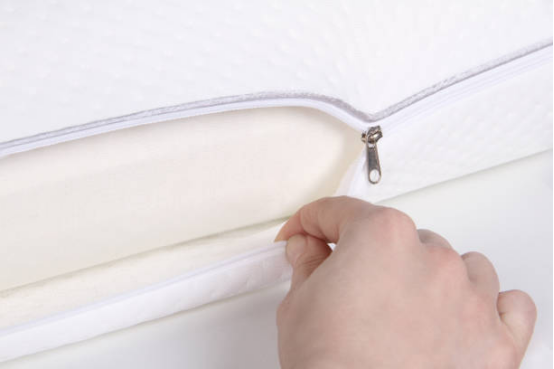
In-depth understanding: Why is there a distinction between “slow” and “fast”?
To understand the pros and cons, we must first understand “why there is a difference in rebound speed” – that is, the three dimensions of material, structure and user experience.
Materials and structural mechanisms
- Memory foam is essentially based on polyurethane, with certain viscoelastic properties added to make it slowly deform when under pressure and slowly recover after the force is removed.
- “Slow-rebound” versions typically contain more viscous segments, causing the material to “slowly flow/adjust” to dissipate the pressure when you apply pressure. After the pressure is released, these viscous molecules need to “recover” to their original position bit by bit, resulting in a delay of several seconds.
- “Fast rebound” is more of an elastic structure, reducing viscous resistance and allowing the material to recover faster after the pressure is removed. It is also often accompanied by a more open/transparent internal structure to assist in rapid recovery and heat dissipation.
- Some high-end materials incorporate a hybrid structure (a blend of slow and fast rebound components) to find the perfect balance between feel and support. Some brands are already offering a “slow-fast hybrid” design, aiming to achieve both a deep fit and flexible support.
User experience and sleep dynamics
From the user’s perspective, “rebound speed” directly affects three things:
- Fit vs. Support
Slow rebound is more likely to “wrap” the head and neck, giving people a sense of sinking and being supported; fast rebound tends to be “slightly fit + elastic support”, which will not let you sink in for a long time. - If you toss and turn frequently throughout the night, switching from side to back, and generally tossing and turning, a fast-rebound
design will provide a more responsive feel, eliminating the lag of the pillow pressing down before it returns to its original position.
Conversely, if you’re someone who rarely moves once you fall asleep, a slow-rebound design will offer advantages due to its stability and low vibration transmission. - Temperature and Heat Dissipation:
Slow-rebound sponges typically have a denser structure and may retain heat slightly more. Fast-rebound sponges, on the other hand, have a more open structure and rebound quickly, facilitating air circulation and heat dissipation. The industry also notes that fast-rebound sponges generally offer superior ventilation performance.
In addition, it is worth mentioning that some studies (or industry articles) claim that pillows made of slow-rebound material can significantly reduce the number of tossing and turning (for example, from 80-100 times per night to 17-20 times) – because pressure changes are slowed down and stability is enhanced.
However, it’s important to emphasize that these figures are often used by manufacturers or brands for promotional purposes, or are derived from small-scale experiments or reviews, and may not necessarily apply to everyone. Therefore, be skeptical when reading these figures.
Slow Rebound vs. Fast Rebound: Which is Better? Comparison from Four Dimensions
| Dimensions | Slow rebound | Quick rebound |
| Wrapping fit | Softer, more “embracing” feeling | Slightly light and snug without excessive sinking |
| Support vs. Elasticity | The support is gentler and more emphasis is placed on pressure distribution | Elasticity + support, faster response to changes |
| Adaptive movement/posture changing ability | When you move too fast, the pillow may not be able to keep up | Quick response, suitable for people with changing postures |
| Temperature Sensitivity/Heat Dissipation | Slightly weaker heat dissipation (dense structure may hinder air circulation) | Better permeability, faster rebound and better heat dissipation |
| Vibration/Motion Transmission | Good at suppressing vibration transmission, suitable for people who share a pillow | Good elasticity but may cause slight “disturbance” during vibration or large movements |
| Durability/Rebound Fatigue | Conceptually, slow rebound materials have more “fatigue” risks | Elastic structures are more stable over time (but still depend on formulation and density) |
| Cost/Price | High-end slow rebound materials may cost more | Some fast rebound materials have mature technology and lower production costs |
Below I have compiled a comparison table of the two rebound methods based on several key dimensions to help readers make judgments based on their own conditions.
From this comparison table we can see that there is no absolutely “good” side, only the one that is more suitable for you.
Let’s take a real-life example: My friend Xiao Zhang is a side sleeper. If his pillow rebounds too quickly at night, he’ll feel a gap between his head and shoulders. Conversely, I sleep on my back and move a lot during sleep. If my pillow rebounds slowly, I tend to feel like my head can’t keep up with the pillow’s deformation. In other words, the two groups have different sensitivities to rebound speed.
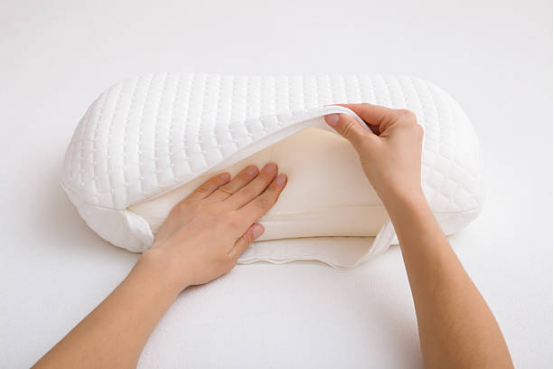
Which type of rebound is more suitable for which type of person?
To make it more practical, I recommend a “slow rebound/fast rebound” combination based on several typical user profiles. You can find the one that suits you best.
User portraits suitable for slow rebound
- Stable sleepers : They rarely change their sleeping position and prefer the experience of “still pillow and still body”.
- Prefer a soft and enveloping feeling : like to be “softly supported” by the pillow and have the head and neck fit gently.
- People with neck and shoulder pain and pressure sensitivity : They seek a balanced and dispersed pressure effect and hope that the pillow can relieve pressure instead of rebounding and impacting.
- For those who are sensitive to sleep disturbance from multiple people/spouses : Slow rebound suppresses vibration and reduces motion transmission, which is beneficial for sleeping together.
User portraits suitable for quick rebound
- People who frequently change sleeping positions : sleeping on their backs/sides/stomachs frequently switch between sleeping and need pillows to respond in time.
- For those who sweat easily or are sensitive to temperature : The quick-rebound structure helps dissipate heat and ventilate, avoiding the feeling of stuffiness at night.
- Prefer a firmer feel : I don’t want to sink too deeply into the pillow, but rather want a pillow that has a bounce and a little support.
- Durability-oriented/long-term investment : Under the premise of excellent material formulation, the fast rebound design may have better fatigue resistance in long-term use.
Of course, this is just a general recommendation. In reality, the key is to “try and feel”: some people are very sensitive to subtle differences; others have a high tolerance for rebound speed.
Practical purchasing advice: How to judge the quality of slow/fast rebound memory pillows?
When you are ready to place an order, here are a few practical “judgment dimensions” to help you make a decision:
- Rebound testing (press and release to observe recovery speed).
Some marketers claim that “slow rebound takes over 3–5 seconds, while fast rebound may take 0.5–1 second.” When you receive a product, press the center of the product and observe the recovery time to subjectively assess whether it matches the product claims. - Density/Hardness Data:
High density often results in a more stable structure, which also affects rebound properties. However, high density does not necessarily mean slower rebound, nor is it necessarily better than low density—the key lies in the combination of formula and structure.
Generally, memory foam pillows require a density of 40–55 kg/m³ and moderate compression hardness to ensure long-lasting support. - Structural Design/Through-Hole Technology:
If a pillow core features ventilation channels, staggered holes, or a honeycomb structure, it indicates the design team has considered both airflow and rebound speed. This design is common in fast-rebound, comfortable memory foam pillows.
Some brands, to achieve both, differentiate the structure at the edges or core (for example, fast rebound at the edges, slow rebound in the center)—a more sophisticated compromise. - Fabrics and covers
like cooling gel, breathable mesh, and moisture-wicking fabrics can alleviate the “thermal stagnation” that can occur with slow rebound.
Some memory foam pillows also have thermally conductive particles, carbon fiber, or phase-change materials on the surface to aid in heat dissipation. - return policy
is key to reducing the risk of buying the wrong pillow. - User word-of-mouth/in-depth evaluations
look at long-tail reviews on the target model (especially 4-star/3-star user feedback), and often mention keywords such as “slow rebound, fast rebound”, “thermal hysteresis”, and “action response”. These are the voices that are closest to real usage.
My actual experience and reflection
When I compared several memory foam pillows, two stood out most: one labeled as ultra-slow rebound (claiming a 4–5 second rebound), and the other as high rebound (claiming a 1-second rebound). Here are my subjective impressions and reflections (for reference only):
- Slow Rebound : The pillow felt incredibly comfortable when I first put it on. However, when I switched from back to side sleeping, the pillow lost its shape and gave my head and neck a brief feeling of being suspended in the air. Later, when I moved to a cooler room, the slow rebound effect became slightly stiffer (the viscoelastic structure stiffens in cold conditions).
- Fast Rebound : It responds quickly to changing positions, almost like the pillow silently “supporting” your head. However, during deep sleep, the pillow does vibrate slightly (especially when your partner tosses and turns). It also provides much better heat dissipation, so you’ll wake up less sweaty in the middle of the night.
Through this experience, I realized that the ideal rebound speed is probably “neither too slow nor too rebound”—a middle ground that retains the feeling of memory without being sluggish. In reality, the pillow I ultimately chose was a memory foam pillow with a “medium speed/moderate rebound” rating.
This also gave me an inspiration: sometimes pursuing extremes (slowest, fastest) is not as good as the user experience brought by compromise and balance.
Slow rebound vs fast rebound, which one is better?
- There is no absolute good or bad : the rebound speed itself is not an absolute standard of “good or bad”, but the result of the combined effect of sleeping habits, body preference, ambient temperature, and pillow structure.
- The choice depends on your “sleep profile” : those who are stable, prefer a wrapping feeling, and pursue pressure relief can give priority to slow rebound; those who frequently change posture, prefer a responsive and sensitive feeling, and focus on heat dissipation tend to prefer fast rebound.
- The ideal is a compromise or mixed design : the future trend may be that more pillows adopt a mixed-spring structure (combination of slow and fast) or a structural partition design to take into account various experiences.
- Be sure to conduct actual testing when purchasing and pay attention to return and exchange guarantees : rebound testing, density/structure observation, user reputation, and trial sleep policy are all keys to reducing your risks.
Want to know which rebound speed is best for your cervical spine? We offer a comprehensive sleep evaluation tool and personalized recommendation system to help you accurately select the ideal memory foam pillow .