The Memory Foam Pillow: An “Invisible Rescue” During Long-Haul Flights

The cabin lights are soft, and the night sky outside the wings has a cool blue hue. The long-haul flight begins its slow ascent, and you feel a slight tension in your neck and a touch of heaviness in your shoulders. The cramped seat and limited space leave your head hanging in the air, and traditional pillows seem insufficient to provide adequate support. In this seemingly inescapable fatigue, a small memory foam pillow quietly comes into play, potentially serving as your “invisible rescue” during your air journey.
Neck pressure in flight: Why a Memory Foam Pillow is needed
Long-haul flights put far more stress on the cervical spine than everyday sitting. Studies show that airplane seats often provide insufficient neck support, especially when resting with the head tilted back or to the side, forcing the cervical spine to maintain an unnatural curve. Prolonged suspension not only leads to muscle stiffness but can also trigger headaches and neck and shoulder pain. The core advantage of the memory foam pillow lies in its slow-rebound property: upon contact with the head, the foam slowly molds, providing stable support that conforms to the curve of the head and neck. This finely tuned support protects the cervical spine within a limited space, thus alleviating suspension fatigue.
For business travelers or frequent travelers who take long-haul flights, a suitable memory foam pillow can significantly reduce neck discomfort. The term “invisible rescue” during air travel is no exaggeration; it scientifically conforms to the body and distributes pressure, improving support in areas that traditional travel pillows cannot reach.
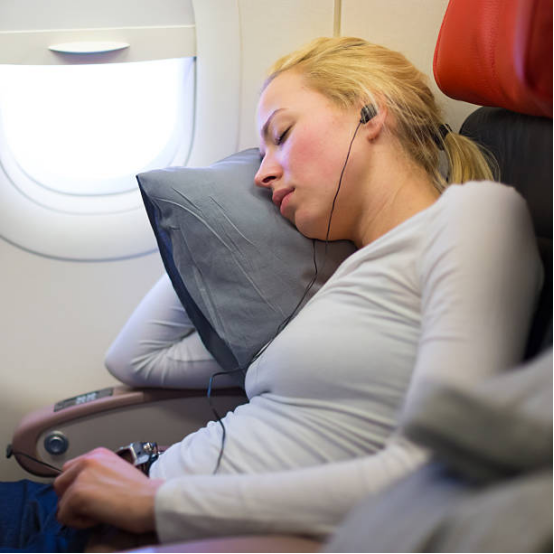
Compact design and portability: Comfort is no longer limited by the seat.
In the limited space of an airplane cabin, bulky pillows are obviously impractical. The compact design of the memory foam pillow solves this problem perfectly. Even in the cramped seats of economy class, it provides adequate support between the neck and shoulders, preventing the head from slipping forward or to the side. The adaptability of the foam means that even when resting briefly on its side, reclining, or by the window, it automatically adjusts its shape to maintain the natural curve of the cervical spine.
Real user feedback shows that long-haul travelers using the Memory Foam Pillow experience significantly less neck and shoulder stiffness after long flights. Compared to ordinary inflatable or down travel pillows, the foam pillow provides a more stable pressure distribution, preventing secondary fatigue caused by frequent head movement. This design not only enhances comfort but also directly impacts post-flight recovery, making long-haul travel less of a physical burden.
Operational strategy: Maximize the benefits of the memory foam pillow.
To make the most of the memory foam pillow during flight, strategy is equally important:
- Pillow position adjustment: Place the memory foam pillow behind or slightly to the side of your neck to provide even support for your cervical spine. For travelers who prefer to sleep near a window, gently leaning it between the backrest and the window can further stabilize the head.
- How it works with your seat: The angle of your seat can affect the effectiveness of the pillow. Slightly lowering the seat back allows the memory foam pillow to better conform to the curve of your neck, reducing forward tilting or tilting of your head.
- To complement your resting posture: Even in limited space, you can maximize the pressure-distributing function of the foam pillow by alternating between front and side support, reducing muscle tension and impaired blood circulation.
- Carrying and maintenance: Travel pillows are prone to compression and deformation after long flights. Choose a breathable storage bag and air them out regularly to keep the memory foam pillow elastic and supportive, ensuring it performs at its best on every flight.
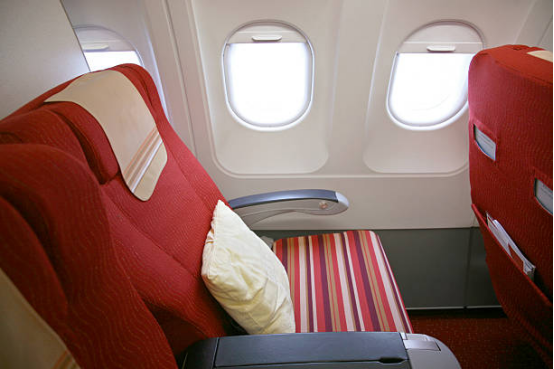
Air travel trends and personalized sleep
As air travelers increasingly demand health and comfort, the memory foam pillow is evolving towards greater personalization. Innovative designs such as adjustable height, zoned density, and removable/washable pillowcases ensure stable support in various seating environments. Meanwhile, some high-end travel brands are beginning to research travel pillows incorporating smart sleep monitoring technology to achieve real-time adjustment of neck pressure, providing more precise “invisible assistance” for long-haul flights.
It’s worth noting that comfort in an aviation environment depends not only on the pillow itself but also on the seat material, cabin humidity, and flight time. The memory foam pillow’s adjustable support works in conjunction with these factors to make the flight experience closer to a comfortable sleep on the ground.
Summarize
During long-haul flights, neck and shoulder tension are almost unavoidable. The Memory Foam Pillow, with its slow rebound properties, compact design, and precise support, provides “invisible relief” from air travel fatigue. From head-neck fit to pressure distribution, it allows the cervical spine to maintain its natural curve within a limited space, significantly improving post-flight recovery and comfort.
In the future, with the combination of material innovation and personalized adjustments, the Memory Foam Pillow will further optimize the long-haul travel experience, making flying no longer a physical burden but a controllable and comfortable mobile rest. Want to learn more about practical travel tips for the Memory Foam Pillow? Click to view other related articles on our website for complete guides and real user experience sharing.