Some weird bedtime habits might be more effective than a memory foam pillow

We all have our own bedtime rituals, from a glass of warm milk to listening to an old song. But some bedtime rituals, while seemingly unconventional, might actually be more relaxing than you think, even leading to a more restful sleep than a brand new Memory Foam Pillow .
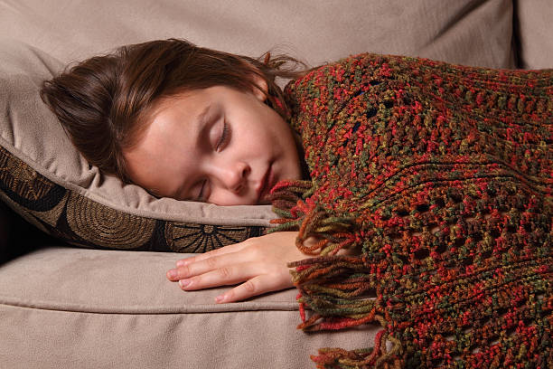
Using a weighted blanket instead of a light sheet?
Remember when your parents would wrap you up like little dumplings as a child? This feeling of being wrapped up can actually provide a strong sense of security. Weighted blankets follow this same principle, but for adults.
It might be filled with small particles, rice grains, or glass beads, and its weight is evenly distributed throughout the body, acting as a gentle pressure on the nervous system. Many insomniacs have found their heartbeats to become more stable and their tossing and turning to be less frequent after using it. While it can’t be said to completely replace a comfortable Foam Pillow , the combination of the two can certainly help the body enter a state of “soothing” more quickly.

Try this: Try to stay awake
It sounds like a joke—you want to sleep, but you remind yourself not to. But research shows that this reverse psychology actually works. When you stare at the ceiling and pretend to stay awake, your body actually speeds up the secretion of signals that make you sleepy.
I’ve tried it a few times myself and was quite surprised by the results. When used with the soft Memory Foam Pillow , you’ll find that the longer you pretend to be awake, the faster sleep sets in. Those sudden drooping eyelids can be a bit satisfying.
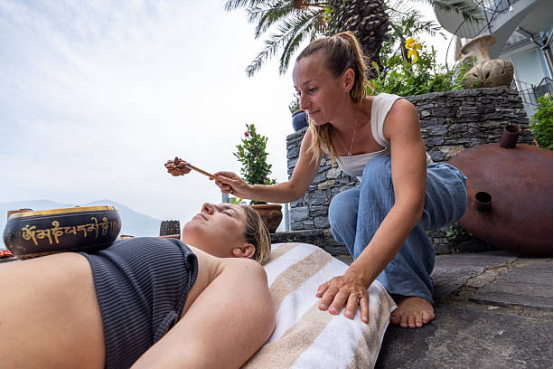
ASMR: A mild electric current from the ears to the brain
ASMR has been trending online for several years now. Some people fall asleep instantly to the sound of raindrops, while others prefer the rustling of paper or gentle whispers. The scientific definition is “autonomous sensory meridian response,” which generally means a tingling sensation in the head followed by a gradual relaxation of the entire body.
My first experience with ASMR was while browsing YouTube and I clicked on a soap-cutting video. A tingling sensation spread across the back of my neck. With a Pillow that fit snugly around my neck , I barely moved that night and woke up feeling incredibly light. I’m not sure if it’s psychological, but for some, ASMR has become a bedtime ritual.

Roll your eyes (yes, you read that right)
Scientists have discovered that gently moving your eyes up and down after closing them can simulate the onset of rapid eye movement (REM) sleep. This small movement can actually trigger the secretion of melatonin, tricking the body into thinking it’s time to fall asleep.
I sometimes try this while lying on the Memory Foam Pillow . It’s a bit silly, but strangely, it does make me sleepier faster. Maybe it’s because my brain is being tricked, but it’s free and has no side effects.
Make a to-do list to relieve anxiety for the next day
To be honest, many times it’s not that we’re not tired, but that our brains refuse to shut down. Especially when we have a meeting, a report to write, or a train to catch the next day, that anxious feeling of “don’t forget” will keep dragging us down.
My trick is to write down my tasks for the next day. I put pen to paper and make a list, detailing every detail. After doing this, even my pillow—either down or memory foam —becomes more “comfortable.” I know I won’t be scrambling the next day.
Sleep is not determined by pillows alone
By now, you might have discovered that it’s not just the environment or the right Foam Pillow that really helps people fall asleep . Those seemingly odd little movements and habits can actually trigger the brain’s relaxation mechanism.
the Memory Foam Pillow that conforms to the curve of the neck , but they are only one piece of the puzzle.
The final secret might be: Don’t be afraid to try “weird” methods. Sleep is never a fixed formula, but more like a personal ritual. Finding your own sense of peace and stability is the “sleep technology” you truly need.